I'm thinking of buying a property
Property Potential Visit
Before you make an offer, we visit the property and send you a written report on what it could become, the work it would need and an indicative cost range, so you can decide with a clear picture, even if you can't be there.
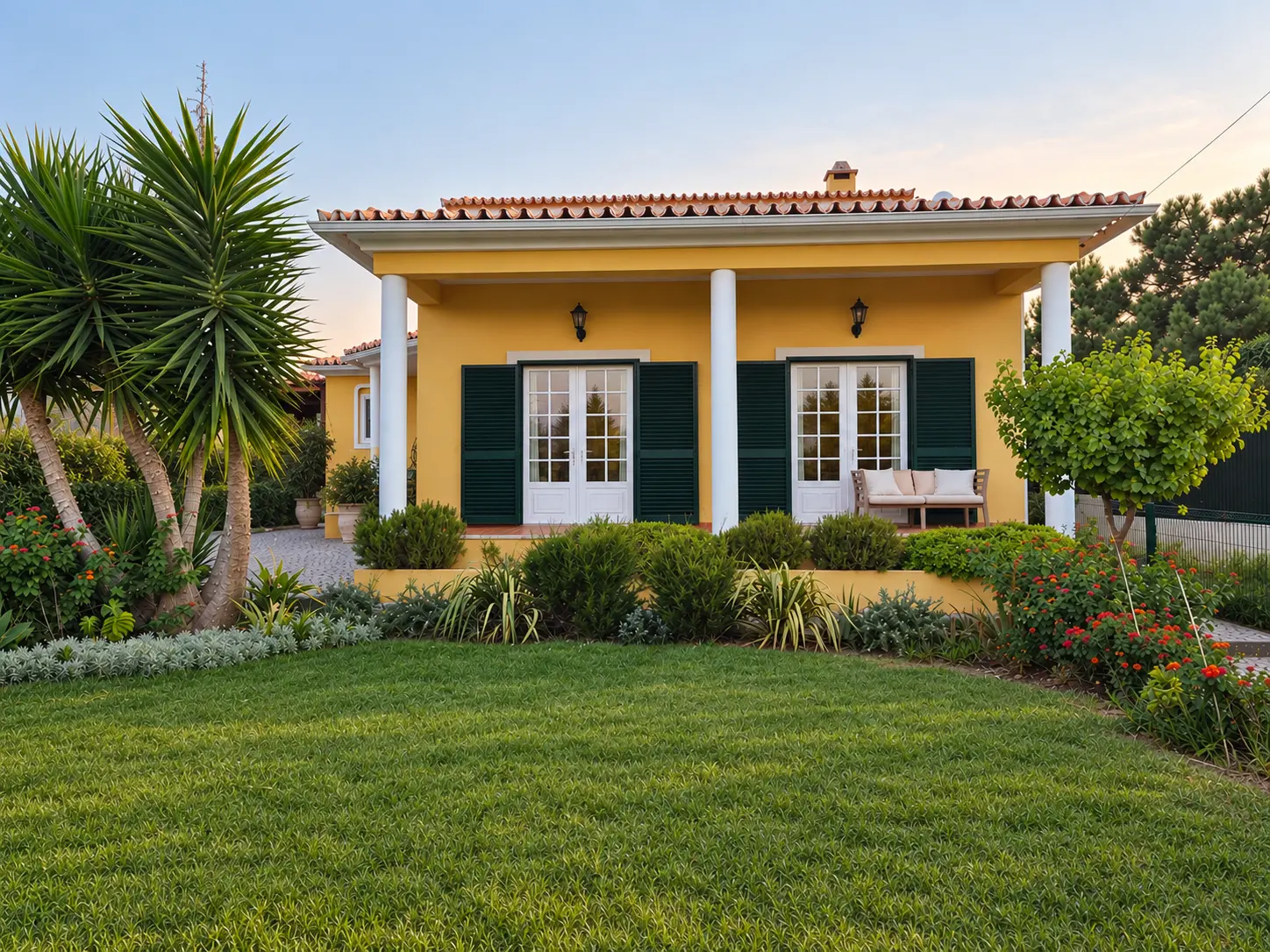
Buying a house that needs work means making an offer before you know what it will take. Estate agents can show you the property; they can’t tell you what it could become or what that would cost. The Property Potential Visit answers those questions before you commit.
Many of our clients are buying from abroad, so the report is written to stand on its own. You don’t need to attend the visit to use it.
What we always look at
A few things change the cost of a renovation more than anything else, so every visit checks them:
- Damp and ventilation
- Windows, insulation and the age of the plumbing and wiring
- How far the house can change, including planning and heritage limits
- Condominium or estate rules on exterior changes
- Paperwork that affects the works: whether the property has its utilisation licence, and whether what’s built matches it
- Outdoor areas, terraces and pools, where there are any
How it works
-
The visit
We visit the property, with you or on your behalf.
Services include:
- •The house, garden and outdoor areas
- •Photos and measurements of the main rooms
- •A video call walk-through if you can't be there
- •Visit within one week of booking
-
The report
A written report within five working days of the visit.
Services include:
- •Two or three directions for what the house could become
- •The likely work, room by room
- •An indicative cost range, with its assumptions and what it leaves out
- •What we couldn't see, and which specialist should check it
- •Our recommendation
-
If you buy
We can take it from there, with the report as the starting point.
Services include:
- •Renovation and project management
- •Furnishing and personalisation
- •The visit fee is credited against the design fee
The visit is a design and renovation assessment. It is not a structural survey, a technical inspection, legal due diligence or a planning opinion; where one of those is needed, the report says so.
Fee and coverage
A fixed fee of €395 (VAT included), covering Lisbon, Cascais, Sintra and the Margem Sul. For properties further away, a travel supplement applies.
What to expect, area by area
Around two-thirds of the buildings in the Lisbon metropolitan area were built before 1991 (Census 2021), before Portugal's first thermal regulations and its current seismic code. For most second-hand houses, little or no insulation is the starting point. The rest depends on where the house is and when it was built.
- Lisbon. Buildings from about 1880 to 1930, known as gaioleiros, have timber floors on masonry walls. Engineering research at IST and LNEC rates them the weakest of Lisbon's building types in an earthquake. Interior walls often carry or brace the structure, so none should come out without an engineer's assessment. Larger works can legally require a seismic vulnerability report, for example when they change how the structure behaves or cover more than a quarter of the floor area (Portaria 302/2019).
- Cascais and Sintra. Much of the housing predates the 1980s, and the energy certificates show it: in 2023, 89% of existing homes certified in Cascais and 93% in Sintra were rated C or lower, against 84% nationally (ADENE). Sintra's hills catch moist Atlantic air, so damp comes first there. Much of the area lies inside the UNESCO landscape and the Natural Park, which limits how far a house can change.
- Aroeira and Verdizela. About half the buildings date from 1981 to 2000, so uninsulated walls and single-glazed aluminium windows are common in houses that haven't been updated. The pine forest is humid, and subterranean termites are native to the region. In 2021, 74 of Almada's 97 subdivisions still being legalised were in this parish, so it is worth checking the utilisation licence early.
- Flats anywhere. Closing a balcony or changing the façade needs the approval of owners holding two-thirds of the building's value as well as a council licence, and courts have ordered work done without them to be removed.
More about the houses in Lisbon, Aroeira, Cascais, Sintra and Paço de Arcos is on each area page.
Usually the quickest way to reach us.
Also from Studio EB
- Renovation & project management — From design and contractor selection to site supervision and final installation.
- Furnishing & personalisation — From furniture, lighting and built-in storage to delivery, installation and final styling, for new and existing homes.